What is the Vault?
The file home your assistant can actually read, and the map of every corner of it.
Every team has a pile of files that matter — price lists, contracts, monthly reports, that one spreadsheet everyone asks for. The Vault is where those files live in Futurity. It looks and works like a normal file manager, with one difference: files in the Vault are readable by Corint. Upload a supplier agreement once, and from then on you can ask questions about it instead of opening it.
Open it from Vault in the left navigation.
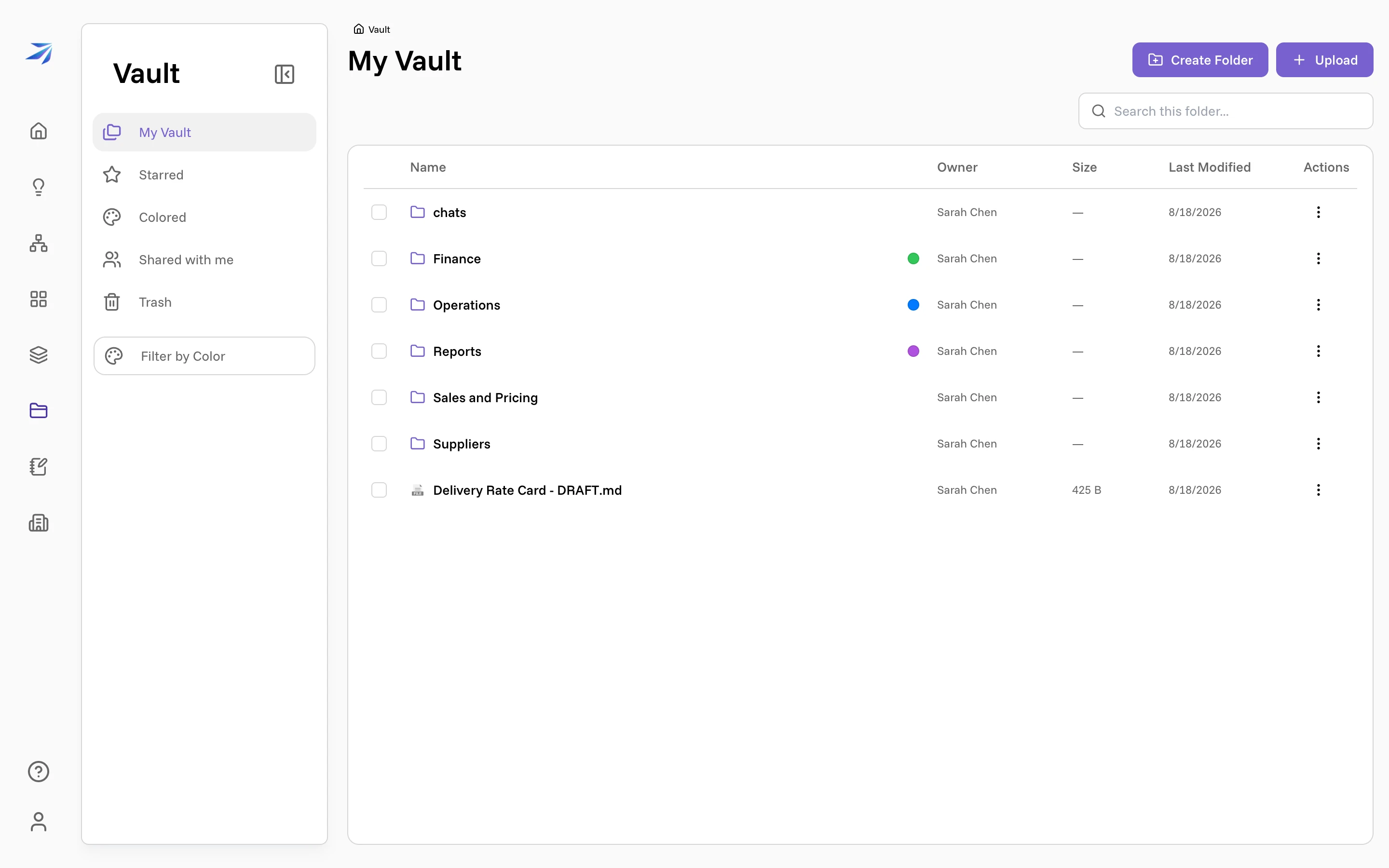
The sidebar, top to bottom
- My Vault — your files and folders. Only you see them, until you share them.
- Starred — everything you've marked with a star, one click away.
- Colored — every file or folder you've given a color label, filterable by color.
- Shared with me — files and folders other people have shared with you.
- Trash — deleted items, kept for 30 days before they're removed for good.
- Filter by Color — jump straight to items of one color.
Working with files and folders
A single click selects a row; a double click opens it. Folders open in place, with a breadcrumb trail at the top and a Back link to retrace your steps. Files open in a preview — more on that in Search and preview.
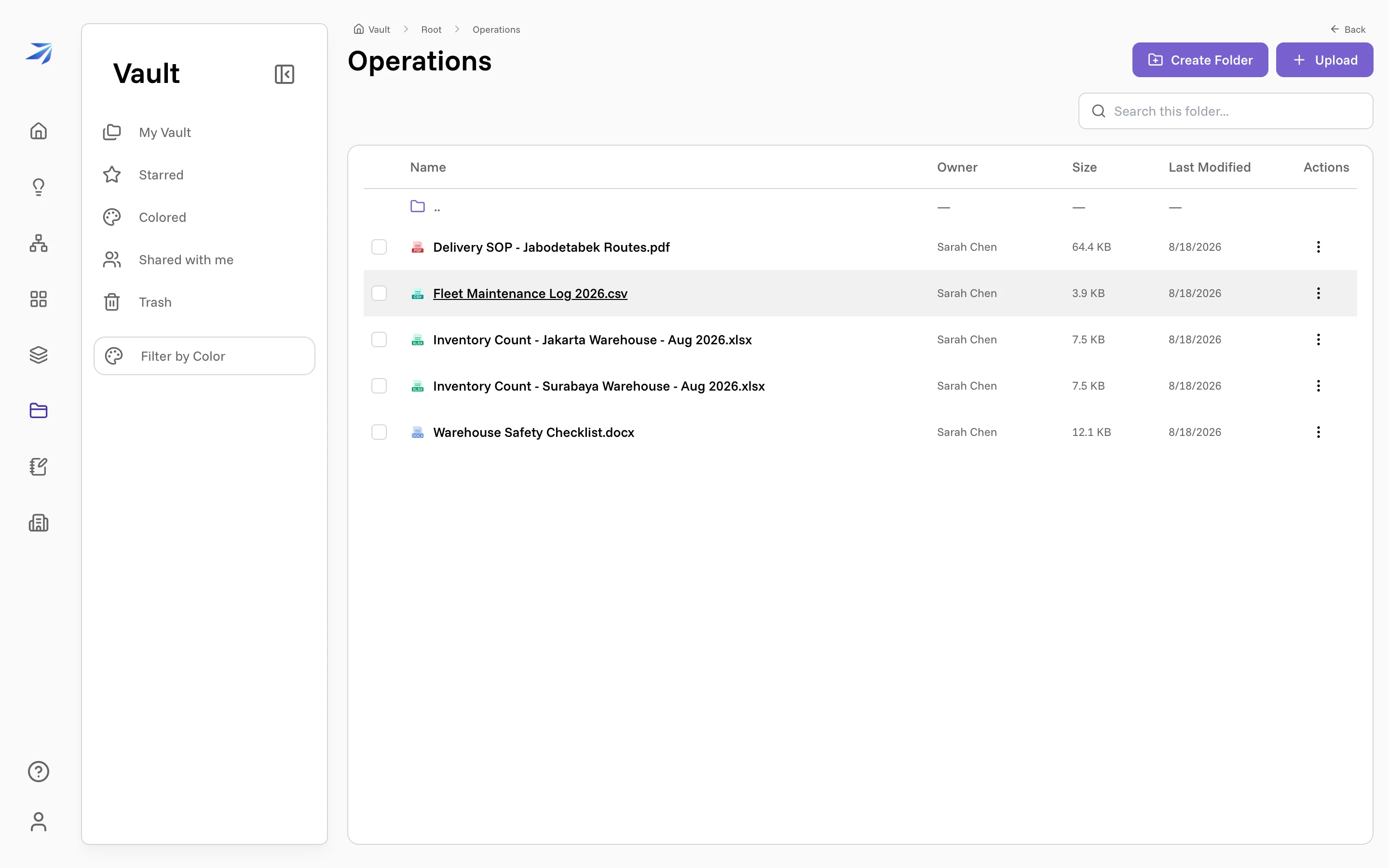
Each row shows the file's owner, size, and when it last changed. The ⋮ menu on the right and a right-click anywhere on a row give you the full set of actions: rename, star, color, move, download, share, trash.
Stars are your shortlist
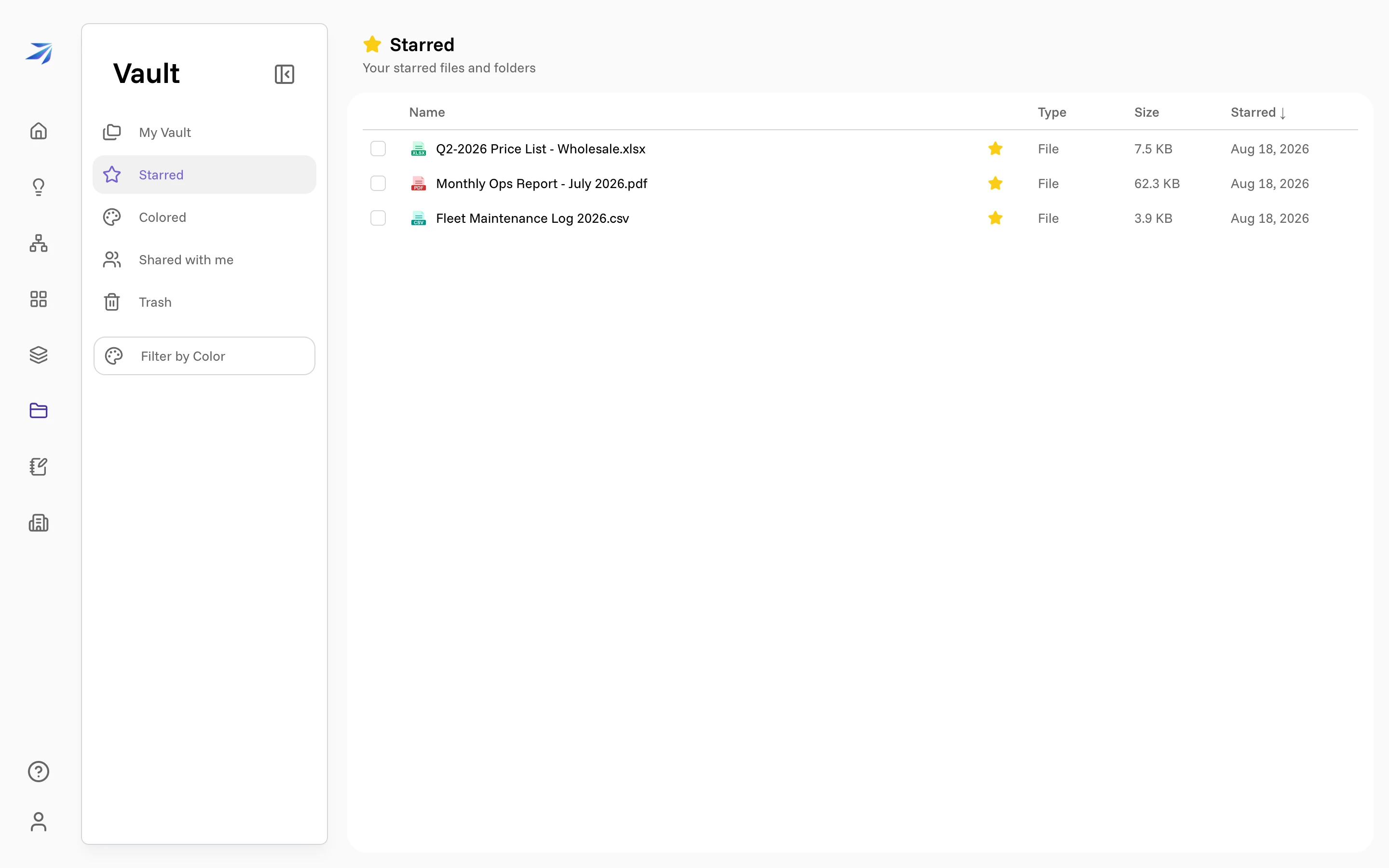
Most files sit quietly until month-end. A few you open every day. Star those — right-click and choose Star — and they collect in the Starred view, so the price list you check every morning is never three folders deep.
Why put files here at all
Two reasons. The practical one: your files become available everywhere you work in Futurity — attach them in a chat with Open Vault, point a workflow at them, open them from the Desktop's file browser. The bigger one: Corint can find and read Vault files when you ask it to, so "what payment terms did we agree with PT Sinar Baru?" becomes a question instead of a scavenger hunt.